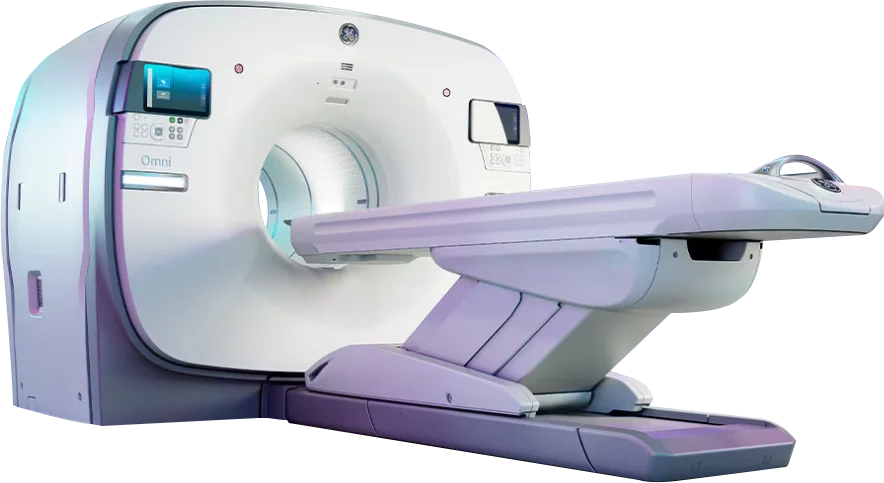

A computed tomography (or CT-scan) is used to visualize nearly all parts of the body in more detail in order to diagnose disease or injury or plan for medical, surgical or radiation treatment.
It is a painless procedure. Sometimes intravenous and oral contrast must be administered for better visualization. Please inform the radiographer of any allergies, medical conditions and if you are pregnant.
Take note:
Depending on the area that will be examined, you may want to wear loose, comfortable clothing. You may be asked to change into a gown for the examination and to remove any jewellery or other metallic items from your body before the examination.
The machine is shaped like a doughnut. You will lie on a narrow, motorized bed that slides through the opening into a tunnel. While the bed moves into the scanner, a series of x-rays are taken at different angles to create cross-sectional images (slices) of organs, bones and soft tissues.
The radiographer will sit in a separate room and will be able to hear and see you, and you will be able to communicate via an intercom.