


Numerous studies show that breast cancer is the most common cancer to affect women, however with early screening and quality treatment the survival rate significantly increases. Mammography plays a central role in the early detection of breast cancer, and other breast diseases.
Screen Her Save Her Non-Profit
Screen Her Save Her is a non-profit initiative and proud partner of RadDX Radiology, dedicated to raising awareness about the importance of annual breast cancer screenings for early detection and prevention.
We believe that by joining hands - individuals, communities, healthcare providers, and organisations - we can drive real change. Help us spread this vital message and empower more women to prioritise their health.

Frequently Asked Questions
Most medical aids cover the cost of a mammogram, or you can pay privately if you choose not to claim. For more information, feel free to contact us.
- If you have had a mammogram done before please bring your Previous Mammogram scan and report along.
- If you are claiming from your medical aid, please bring your medical aid details along.
- Proof of Identification.
15 Minutes
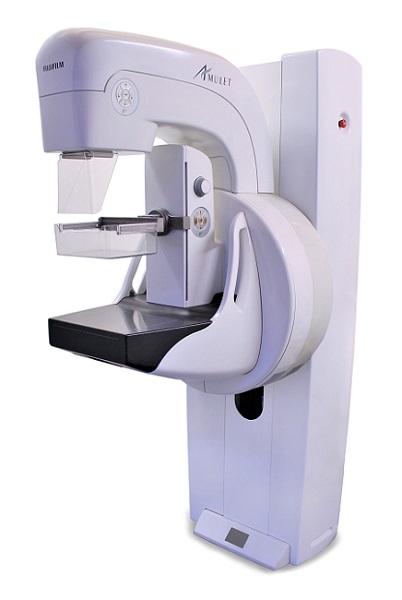
At RadDX Medical, we commit ourselves to make the experience as comfortable as possible for the patient. With the latest breast mammography technology, we can move away from an era of using deep pressure for imaging that was causing pain for some patients. Feel free to leave your details if you would like our all-female staff to walk you through the new process.
If you need an ultrasound, both the cost of the mammogram and the ultrasound will be covered by your medical aid.
Mammograms can’t be replaced, but we offer ultrasounds if you do not meet the criteria for a mammogram yet. The requirements for a mammogram are; if you are over the age of 40 years or ten years before the age of breast cancer diagnoses in a direct relative.
No preparation is needed. You can continue as usual with your day before and after the screening.
Yes, all medical aid patients require a referral for us to be able to claim this procedure from medical aid.
Yes, we do. For a cost breakdown, please feel free to contact us.
Mammograms utilize minimal doses of radiation, the risk of harm has never been proven. With modern technology radiation doses have consistently decreased with time while increasing in accuracy.
The requirements for a mammogram are if you are over the age of 40 years or ten years before the age of breast cancer diagnoses in a direct relative. Breast Ultrasound can be done for any age. Thus if you feel an abnormality, you are welcome to book an ultrasound at one of our locations.
Yes, all our patients get their mammogram results on the day of the screening.
All of the mammograms and breast ultrasounds are done by our expertly trained all-female staff.
Yes. Mammograms are safe after any breast augmentation or procedure.
Breast Self Examination
In front of a mirror
Check for any changes in the look and feel of your breasts such as dimpling, size difference or nipple discharge. Inspect 4 ways: arms at sides; arms overhead, firmly pressing hands on hips; and bending forward.
Laying down
Lie on your back with a pillow under your right shoulder and your rand hand under your head. With the 4 fingers of your left hand make small circular motions, follow an up-and-down pattern over the entire breast area, under the arms and up to the shoulder bone, pressing firmly. Repeat on the other side.
Whilst bathing
With your right arm raised, check your right breast with a soapy left hand and fingers flat using the same method described in Step 2. Repeat on the other side.
What to look out for?
Look for changes in the skin texture such as puckering or dimpling. Feel for lumps and thickening. Look for nipple discharge. Look for nipple inversion and changes in direction. Look for swelling in your armpit or around your collar bone. Feeling constant pain in your breast or armpit. Look for a change in size and shape. Look for a rash.
Myths & Facts
Technical advancements in mammography equipment improved both technique and results, producing studies that are high in quality, but lower in radiation exposure. The radiation exposure of a mammogram equals to about two months of background radiation for the average woman. The radiation from annual screening mammogram is justified by the benefit of early detection of breast cancer, which in turn opens up a myriad of treatment options, which ultimately leads to a decrease in the breast cancer mortality rate. Don’t be afraid to raise any concerns that you may have with your healthcare provider.
If you have breast implants, please raise this with your healthcare provider before your appointment. You will be assisted by a mammographer that is expertly trained in working with patients with implants. The mammographer will ensure that your breast implants are not harmed. Special protocols are followed for patients with breast implants, which produce high quality images for the radiologist. The integrity of your breast prosthesis will be examined on ultrasound by our highly skilled sonographers.
There is no evidence to show that women with small breasts are less likely to develop breast cancer. When it comes to breast cancer developing, size does not matter. Small breasts still contain fibroglandular tissue, wherein breast cancer can develop. Although very small breasts tend to be more difficult to examine, the mammographers are expertly trained in working with women who have very small or large breasts.
1 in 25 women in South Africa may develop breast cancer. More than 75% of women who have breast cancer have no family history. If you wait for symptoms to show before going for a mammogram, the cancer may be more advanced at that point and treatment options limited. Early detection of breast cancer through mammographic screening is key to provide more treatment options, less surgical intervention, and a better quality of life and survival rate.
The gold standards to identify breast cancer early is an annual mammogram and breast ultrasound, for women over the age of 40 years. A monthly breast self-examination, Is also important, but alone are not enough. It has been shown that by the time the patient feels a lump, it is already 2 to 3 cm in size! The goal of a mammogram is to find breast cancer even before it is even noticed by the examining clinician or patient. Breast self-examination should commence under the age of 30 years. This allows you to detect any changes early.
Mammographic screening is detection of early stage breast cancers. Breast cancer can develop in any stage of life, and thus, one negative mammogram does not mean you won’t develop breast cancer later on. An annual mammogram increases the chance of detecting breast cancer at an early stage. Early detection of breast cancer through mammographic screening is key to provide more treatment options, less surgical intervention, and a better quality of life and survival rate.