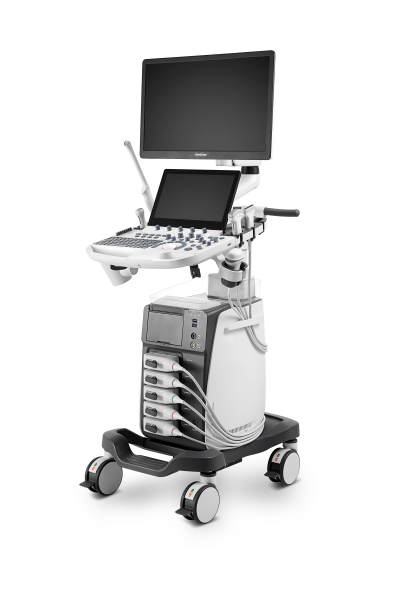


Ultrasound is used to capture live imaging and evaluate mainly the soft tissue structures within the body. Because it uses no ionizing radiation, it is the modality of choice to examine the structural appearance of abdominal organs, measure the flow of blood within blood vessels and evaluate the glands. it is used to access the integrity of muscles, tendons and small ligaments. In conjunction with Mammography, ultrasound is also used to assess breast tissue.
We perform a range of ultrasound examinations including abdominal, cardiac, vascular and musculoskeletal imaging. Most ultrasound examinations require no preparation, however, an abdominal ultrasound (especially the gallbladder) requires the patient to be fasting for a minimum of 6 hours. Ultrasound of the pelvis requires a full bladder, therefore you may be asked to drink four to six glasses of water in order to fill the bladder for optimum visualization of the pelvic structures.
Take note:
Depending on the area that will be examined, you may want to wear loose, comfortable clothing. You may be asked to change into a gown for the examination and to remove any jewellery or other metallic items from your body before the examination.
Diagnostic ultrasound uses high-frequency sound waves, inaudible to the human ear, to produce images of structures within your body. The sound waves are transmitted through the body and received back using a transducer. The information is transmitted to a computer screen which will display it as a diagnostic image.